
 EN
EN


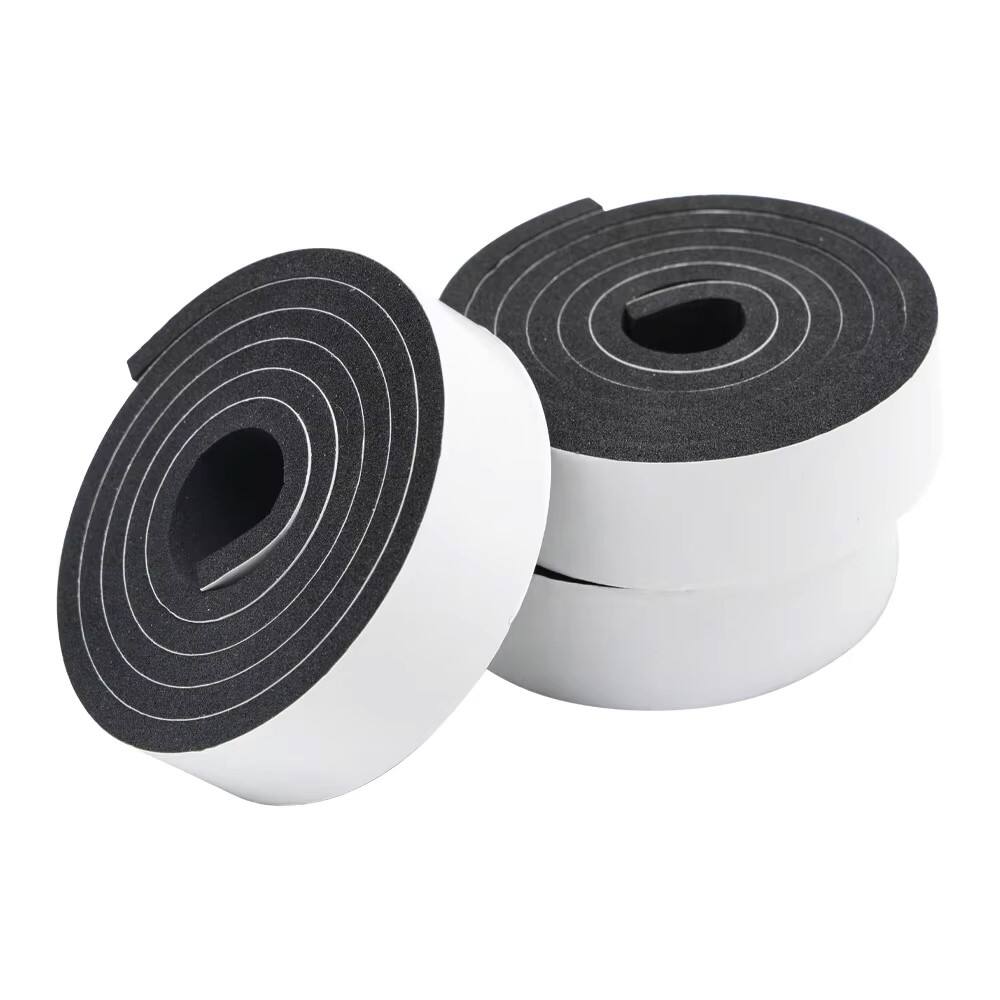
For manufacturers and engineers in the fast-evolving electric vehicle (EV) sector, finding a gasket solution that performs reliably under pressure is paramount. The battery box, the heart of an EV, requires a sealing component that is not just good but exceptional. At Quanzhou Wefoam Trading Co., Ltd., part of the SANSD Group with over 45 years of experience, we specialize in transforming advanced materials like EPDM foam into precision-engineered seals. This article provides a deep, professional guide on customizing EPDM foam for electric vehicle battery box gaskets, drawing on our expertise as a global leader in foam manufacturing.
Why EPDM Foam is the Premier Choice for EV Battery Seals
The electric vehicle battery box presents a uniquely challenging environment. It must be protected from water ingress, dust, vibration, and thermal fluctuations—all while withstanding long-term exposure to the elements. This is where Ethylene Propylene Diene Monomer (EPDM) foam excels, standing out as a superior material for gaskets and seals.
Unmatched Environmental Resilience: EPDM foam is renowned for its outstanding resistance to weather, ozone, UV radiation, and a wide range of temperatures (typically from -50°C to +150°C). This makes it ideal for the underbody location of EV batteries, where conditions can be extreme.
Excellent Sealing Performance: The inherent flexibility and compressibility of closed-cell EPDM foam create a reliable, long-lasting seal that compensates for minor surface irregularities in the battery enclosure.
Vibration Damping and Impact Absorption: Beyond sealing, the foam structure provides crucial cushioning and shock absorption, protecting sensitive battery cells and electrical connections from road vibrations and minor impacts.
Chemical Stability: EPDM offers good resistance to polar fluids, water-based coolants, and alkalis, which are common in and around the battery system.
Advancing Sustainability: SANSD's Eco-Conscious Approach
At SANSD, we recognize that true material innovation extends beyond performance to include environmental responsibility. Our commitment to a circular economy is exemplified by our proprietary melting/thermal separation method for recycling EVA foam materials. This advanced recovery process allows for the efficient separation and repurposing of polymer components, significantly reducing waste and supporting closed-loop production cycles. As noted by experts in polymer science, such thermal recovery techniques are pivotal for reducing the carbon footprint of industrial foam applications while maintaining material integrity for future use. This eco-innovative capability underscores our dedication to developing high-performance sealing solutions that align with the sustainability goals of the modern EV industry.
The WEFOAM Customization Process: A 5-Step Framework
Our strength lies in translating material science into functional, high-performance parts. Customizing EPDM foam is a collaborative engineering process that moves from concept to final product. Here is our proven framework:
Step 1: Defining Performance Parameters and Specifications
Every successful project starts with a clear definition of requirements. We work with you to specify:
Operating Environment: Expected temperature range, exposure to chemicals or salt spray, and UV conditions.
Physical Demands: Required compression set resistance, tensile strength, and long-term compression force deflection (CFD).
Critical Dimensions & Tolerances: Precise dimensions of the gasket profile and the compression gap to ensure perfect fit and function.
Regulatory Compliance: Adherence to necessary automotive, flame retardancy (e.g., UL 94), or other industry-specific standards.
Step 2: Material Formulation and Grade Selection
Not all EPDM is created equal. Based on the specifications, our R&D team fine-tunes the material formulation. We adjust the polymer blend, filler content, and curing system to achieve the precise density, cell structure, and mechanical properties needed. We can produce formulations ranging from soft, highly compressible foams to firmer, more rigid varieties to meet your specific sealing force requirements.
Step 3: Precision Molding and Cutting
At our factory, equipped with over 100 sets of precision equipment, we bring the design to life. For gaskets, we primarily employ two of our core custom processing techniques:
Precision Die-Cutting: Ideal for 2D flat gaskets of any shape. Our advanced cutting technology ensures clean, burr-free edges and consistent dimensions from the first piece to the ten-thousandth.
Custom Molding: For complex 3D shapes, gaskets with integrated fasteners, or those requiring specific cross-sectional profiles (like D-shapes or bulb seals), molding is the optimal process. It produces a seamless, homogeneous part with excellent structural integrity.
Step 4: Fabrication and Value-Added Processing
To enhance functionality, we offer secondary customizable options:
Adhesive Lamination: Applying high-performance acrylic or rubber-based pressure-sensitive adhesives (PSA) with protective liners for easy installation on the battery box flange.
Fabric or Leather Lamination: While less common for battery boxes, lamination can be specified for aesthetic or additional wear-resistant purposes in other applications.
Drilling and Punching: Creating precise holes for bolts, vents, or wiring pass-throughs as part of the gasket assembly.
Step 5: Rigorous Quality Assurance and Testing
Before any gasket leaves our facility, it undergoes stringent quality checks. We verify dimensions, test compression set, assess adhesion strength (if laminated), and can perform environmental simulation tests to ensure the product will perform as specified in the field.
From Material to Application: Ensuring Optimal Performance
EPDM foam is more than just a raw material; it is an engineered solution. In the context of EV battery boxes, its application directly impacts vehicle safety, longevity, and reliability. A well-customized gasket ensures:
IP67/IP68 Protection: Achieving the critical Ingress Protection (IP) rating required for the battery pack.
Thermal Management: Acting as a thermal interface or isolator as part of the broader battery thermal management system.
Long-Term Reliability: Maintaining its sealing force and resilience over the vehicle's lifetime, resisting the effects of compression set and environmental aging.
Why Partner with WEFOAM for Your EV Sealing Needs?
Choosing WEFOAM as your EPDM foam gasket manufacturer means leveraging nearly half a century of polymer foam expertise. As part of the SANSD Group, we combine deep technical knowledge with a commitment to quality, sustainability, and customer collaboration.
45+ Years of Material Science Expertise: We understand polymers at a fundamental level.
Eco-Innovation Leadership: Our proprietary melting/thermal separation recycling process for EVA foam reflects our commitment to sustainable, circular manufacturing—a value increasingly crucial in the EV sector.
End-to-End Customization: We control the process from raw material compounding to final fabricated part.
Global Standards, Local Collaboration: We serve clients worldwide with a focus on clear communication and understanding your unique challenges, whether in sports shoes, packaging, or advanced industrial applications like electric vehicles.
Frequently Asked Questions (FAQ)
Q1: What is the typical lead time for developing and producing a custom EPDM foam gasket sample?
A1: The timeline varies based on complexity. For a standard profile with an existing material grade, initial samples can often be produced within 2–3 weeks. A completely new formulation or complex molded shape may require 4–6 weeks for prototype development. We prioritize clear milestone communication throughout the process.
Q2: Can EPDM foam be made flame retardant to meet automotive safety standards?
A2: Yes, absolutely. A key aspect of our custom processing and material formulation is the ability to incorporate flame-retardant additives to meet specific standards such as UL 94, DIN 75200, or other OEM-specific requirements for electric vehicle components.
Q3: How do you ensure consistency in density and performance across large production runs?
A3: Consistency is guaranteed through our controlled manufacturing process. We use precision equipment and automated systems for mixing and molding. Every production batch is tied to a specific formula, and we conduct statistical process control (SPC) and regular quality audits to ensure the physical properties and dimensions remain within the tight tolerances required for automotive applications.
Q4: Besides die-cutting and molding, what other services do you offer for finishing EPDM gaskets?
A4: Beyond core shaping, we provide comprehensive fabrication services. This includes precision drilling for mounting points, lamination with high-performance adhesives for installation, and slitting or kiss-cutting on rolls for automated assembly. We can also provide protective packaging tailored to prevent damage during transit.
Table of Contents
- Why EPDM Foam is the Premier Choice for EV Battery Seals
- Advancing Sustainability: SANSD's Eco-Conscious Approach
- The WEFOAM Customization Process: A 5-Step Framework
- From Material to Application: Ensuring Optimal Performance
- Why Partner with WEFOAM for Your EV Sealing Needs?
- Frequently Asked Questions (FAQ)