
 EN
EN


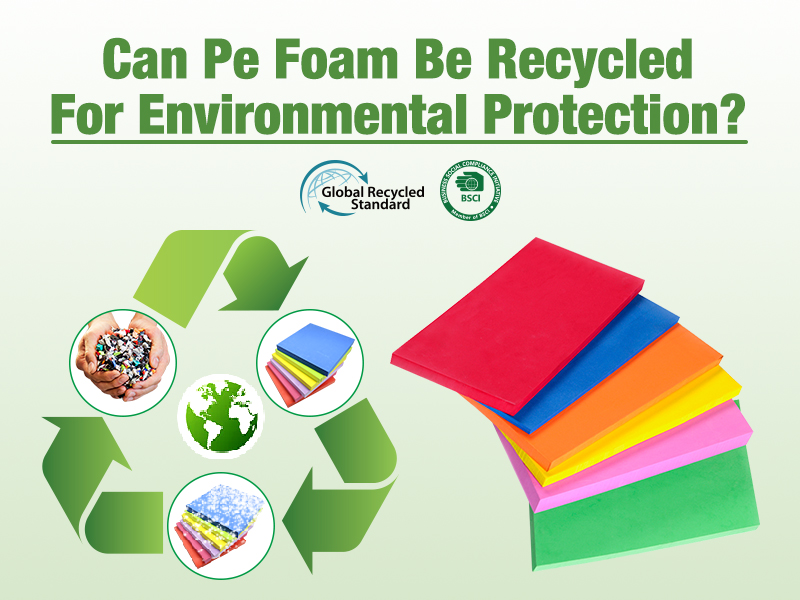
In today's eco-conscious global market, industries and consumers alike are scrutinizing the environmental impact of materials. A pressing question emerges, particularly for sectors utilizing polymer foams: Can PE foam be recycled for environmental protection? As a leading force in advanced foam manufacturing, Quanzhou Wefoam Trading Co., Ltd., leverages the 40-year legacy of the SANSD Group to provide not just answers, but practical, sustainable solutions. This comprehensive analysis explores the recyclability of Polyethylene (PE) foam, its role in the circular economy, and how choosing the right partner can amplify your environmental stewardship.
Understanding PE Foam: A Versatile Material Under the Microscope
Polyethylene foam, known for its closed-cell structure, is a lightweight, durable, and versatile material prized for its excellent cushioning, insulation, and water-resistant properties. At Wefoam, our expertise extends across a spectrum of materials including EVA, PE, EPDM, and TPE foam, each serving unique applications from sports shoes and luggage to gym pads and marine decking.
The very characteristics that make PE foam invaluable—its resilience and chemical inertness—also shape its end-of-life narrative. Unlike some biodegradable alternatives, traditional PE foam persists in the environment, making the question of its recyclability not just relevant but critical for environmental protection.
The Recyclability of PE Foam: Challenges and Technological Advancements
So, can PE foam be recycled? The direct answer is yes, PE foam is technically recyclable. However, the process is nuanced and hinges on technology, infrastructure, and material purity.
1.The Recycling Process: PE foam recycling typically involves collection, compaction/densification, and then reprocessing. The material is cleaned, shredded, and melted to be reformed into pellets. These pellets can then manufacture new, often non-food-grade PE products like plastic lumber, durable packaging, or even new foam sheets. This process conserves resources and reduces landfill waste.
2.Key Challenges: The primary hurdles are logistical and economic. PE foam is bulky, making collection and transportation costly. Contamination from adhesives, laminates (like fabric or leather), or other materials can complicate recycling. This is where Wefoam’s custom processing expertise becomes pivotal. By designing for disassembly and minimizing composite use, we enhance the recyclability of our products from the outset.
3.Wefoam’s Proactive Approach: We view recyclability as an integral part of manufacturing. Our capabilities in producing oversized foam boards and rolls with consistent quality allow for efficient yield and less waste generation. Furthermore, our custom cutting and molding services ensure precise fabrication, minimizing off-cuts and scrap material that enters the waste stream.
Beyond Recycling: A Holistic Strategy for Environmental Protection
True environmental protection extends beyond end-of-life recycling. It encompasses the entire product lifecycle—a philosophy deeply embedded in our operations at Wefoam.
Material Innovation: We continuously explore formulations with higher content of recyclable or sustainably sourced materials. Our TPE foam range, for instance, often includes versions with enhanced recyclability profiles compared to traditional cross-linked materials.
Waste Reduction at Source: Our advanced manufacturing processes are optimized for efficiency, significantly reducing industrial scrap. Any generated clean production waste is ideally channeled back into the recycling loop.
Product Durability and Longevity: By manufacturing high-quality, durable foam for toys, packaging, and marine decking, we ensure products have longer service lives, delaying their entry into the waste cycle and conserving resources in the long term.
Guidance and Partnership: We partner with our global clients to develop sustainable product strategies. This includes selecting the most appropriate foam material (be it EVA, PE, EPDM, or TPE), optimizing designs for recyclability, and providing guidance on responsible end-of-life management within their regions.
Why Partner with Wefoam for Your Sustainable Foam Needs?
Choosing Quanzhou Wefoam Trading Co., Ltd., as your foam materials supplier means aligning with a partner committed to progress.
Legacy and Expertise: Four decades under the SANSD Group have honed our mastery in foam technology, allowing us to innovate responsibly.
Product Range and Customization: Our diverse product line—from yoga mats and slippers to technical industrial applications—coupled with deep custom processing capabilities (like lamination and drilling), lets us create solutions that balance performance with environmental considerations.
Global Mindset, Local Relevance: We understand and respect the diverse regulatory and cultural landscapes of our international clientele. Our communications and recommendations are tailored to meet global standards for environmental protection while being practically applicable across different markets.
Conclusion: A Resounding "Yes" with a Call for Collaborative Action
Can PE foam be recycled for environmental protection? Absolutely. It is a viable and crucial component of sustainable material management. However, its success depends on a collaborative chain: from manufacturers designing for recyclability, to industries choosing responsible partners, to consumers and waste systems ensuring proper disposal.
At Quanzhou Wefoam Trading Co., Ltd., we are more than a manufacturer; we are your strategic ally in navigating the path toward sustainability. We provide the high-performance, versatile EVA, PE, EPDM, and TPE foam materials your products require, while actively investing in the knowledge and processes that minimize environmental impact. By prioritizing recyclability and lifecycle efficiency, we don't just supply materials—we contribute to a more sustainable future for industries worldwide.
Together, through informed material choices and partnerships, we can transform the potential of PE foam recycling into a tangible force for environmental protection.
Frequently Asked Questions (FAQ)
Q1: Is all PE foam from Wefoam recyclable?
A1: The base PE foam material we produce is recyclable. However, the final recyclability of a product depends on post-processing. For instance, a pure PE foam sheet is more readily recyclable than one laminated with a complex fabric. We work closely with clients to design products that optimize both function and end-of-life recyclability.
Q2: How does PE foam recycling compare to EVA foam recycling for environmental protection?
A2: Both PE and EVA foams are thermoplastics and can be recycled, but the processes differ. Cross-linked EVA can be more challenging to recycle mechanically than PE. At Wefoam, we provide expertise on the most suitable material—be it EVA, PE, or TPE foam—for your application's performance and sustainability goals.
Q3: What should I do with PE foam waste from my production line?
A3: We recommend segregating clean, uncontaminated PE foam production scrap. This material holds the highest value for recyclers. We can assist partners in identifying appropriate compaction solutions or connecting with regional recycling specialists who handle polymer foams, turning waste into a resource for environmental protection.
Q4: Are Wefoam's products like yoga mats and slippers made from recycled PE foam?
A4: We offer both virgin and customized solutions incorporating recycled content. Our custom processing capabilities allow us to develop products based on your specific sustainability targets. Inquire with our team about developing yoga mats, slippers, or packaging materials with a defined recycled content.
Q5: Besides recycling, how else does Wefoam contribute to environmental protection?
A5: Our commitment is multi-faceted: 1) Manufacturing efficiency to reduce waste at source, 2) Developing durable products for luggage, gym pads, and marine decking that last longer, 3) Providing technical guidance to clients on sustainable design, and 4) Exploring innovations in material science for a lower environmental footprint across our entire diverse product line.
Table of Contents
- Understanding PE Foam: A Versatile Material Under the Microscope
- The Recyclability of PE Foam: Challenges and Technological Advancements
- Beyond Recycling: A Holistic Strategy for Environmental Protection
- Why Partner with Wefoam for Your Sustainable Foam Needs?
- Conclusion: A Resounding "Yes" with a Call for Collaborative Action
-
Frequently Asked Questions (FAQ)
- Q1: Is all PE foam from Wefoam recyclable?
- Q2: How does PE foam recycling compare to EVA foam recycling for environmental protection?
- Q3: What should I do with PE foam waste from my production line?
- Q4: Are Wefoam's products like yoga mats and slippers made from recycled PE foam?
- Q5: Besides recycling, how else does Wefoam contribute to environmental protection?